Family Activities and Leisure on the French Riviera Explained Properly
So, what does "family leisure" actually mean on the Côte d'Azur?
Have you ever arrived on the French Riviera with children in tow and felt, almost immediately, that the destination was designed for someone else? The gleaming superyachts, the casino terraces, the Michelin-starred menus, none of it quite fits when you have a ten-year-old demanding an ice cream and a toddler who has just discovered a fascination with pigeons. That gap between the Riviera's glossy reputation and the practical reality of a family holiday is real. But it is also, once you understand the territory, surprisingly easy to bridge.
Family activities and leisure on the French Riviera cover a far broader spectrum than most visitors initially assume. The Côte d'Azur stretches roughly from Menton near the Italian border westward past Cannes, encompassing a landscape that shifts from dramatic Alpine foothills to sheltered Mediterranean coves within a single afternoon's drive. That geographical variety is the first thing to grasp. It means the options available to a family are not simply "beach or no beach" but rather a layered set of choices that change with altitude, season, and the ages of the children involved.
The myth that the Riviera is purely adult territory
This is the assumption that does the most damage before a trip even begins. The French Riviera built its international legend on Belle Époque aristocrats, the Nouvelle Vague film crowd, and later the Formula 1 circuit in Monaco. That history is real. It is also largely irrelevant to what the coastline offers families in practice.
Nice alone, the largest city on the French Riviera, contains the Promenade du Paillon, a long urban park running from the sea toward the old town, with free water jets, trampolines, and open lawns that fill with local families every evening. The Musée d'Histoire Naturelle on the Boulevard Risso has kept children occupied for generations with its natural history collections. Antibes, further west, is home to Marineland, one of Europe's larger marine theme parks, which draws families specifically because of its aquarium, penguin enclosure, and water slides. These are not hidden gems requiring insider knowledge. They are simply overlooked by travel writers who prefer to photograph the harbor at Villefranche-sur-Mer.
The coast is only half the picture
Most families anchor themselves to the seafront and never look inland. That is a significant missed opportunity. The hinterland villages, the so-called arrière-pays, offer a completely different register of family activities and leisure on the French Riviera, and one that is considerably less crowded during the peak summer weeks.
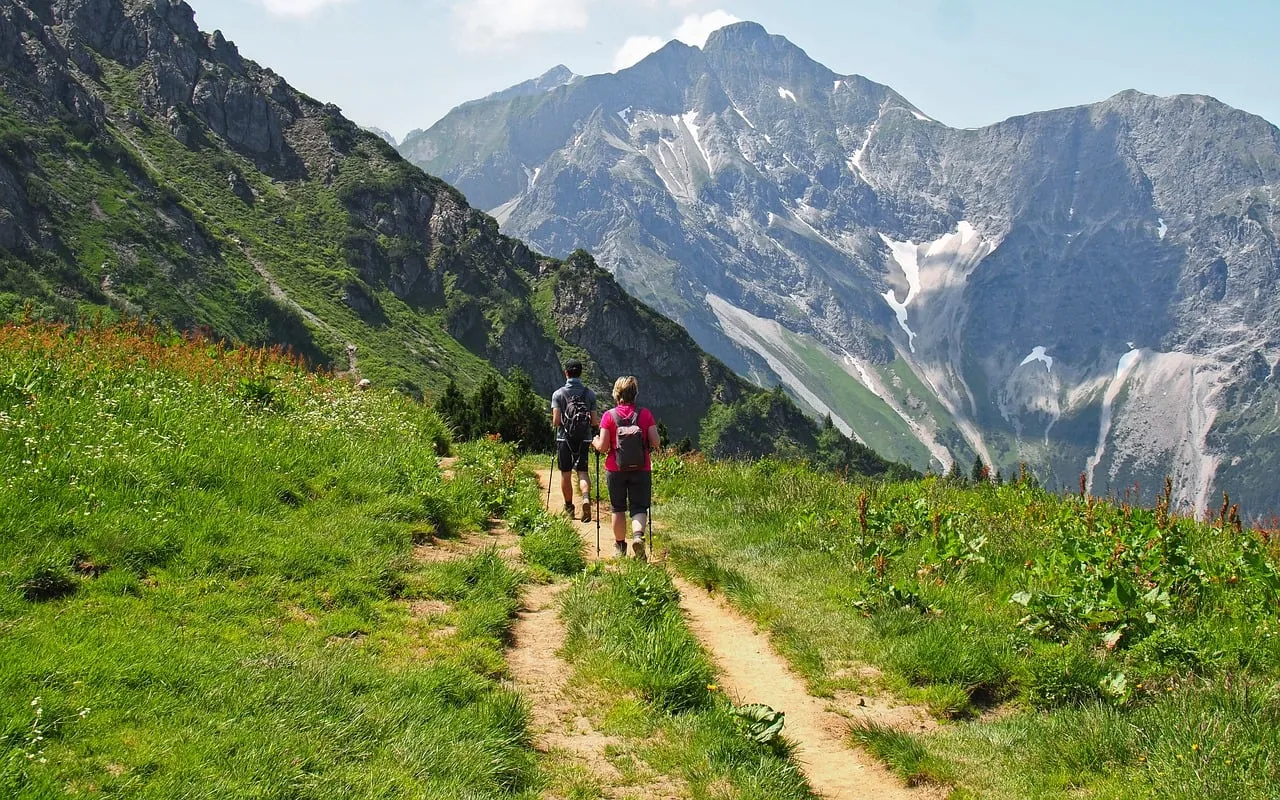
Èze Village, perched at over 400 meters above sea level, gives children a genuine medieval fortress to explore, with narrow stone passages, a cactus garden at the summit, and vertiginous views across to Corsica on clear days. The village of Saint-Paul-de-Vence, while better known for the Fondation Maeght and its modern art collection, also has ramparts that children can walk along and a central pétanque court where locals play throughout the afternoon. Further into the hills, the Gorges du Verdon, technically just beyond the administrative boundaries of the Alpes-Maritimes but easily reachable from the coast, offers kayaking, hiking trails graded for different fitness levels, and lake swimming at Lac de Sainte-Croix.
The point is not that the beach is overrated. It is that treating the Riviera as a single-dimensional beach destination means leaving the majority of its family potential untouched.
Water is everywhere, and not only salt water
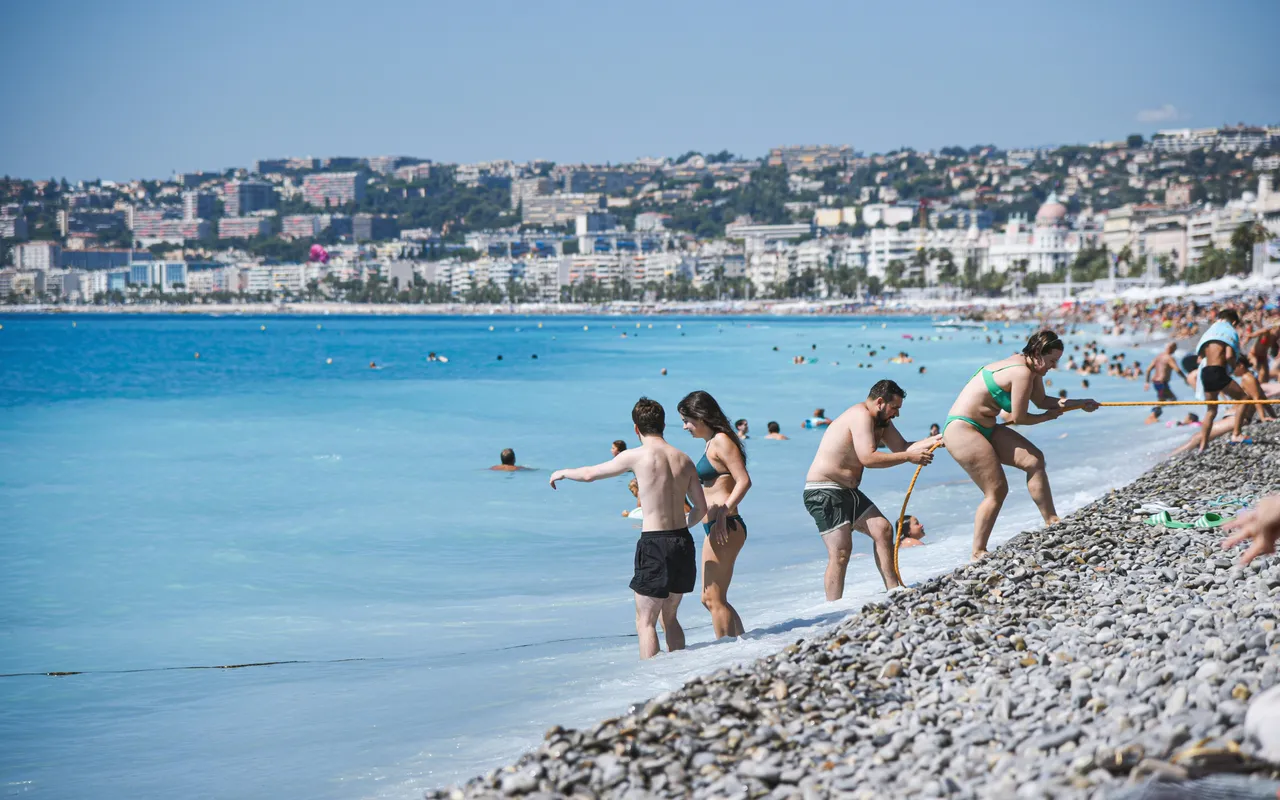
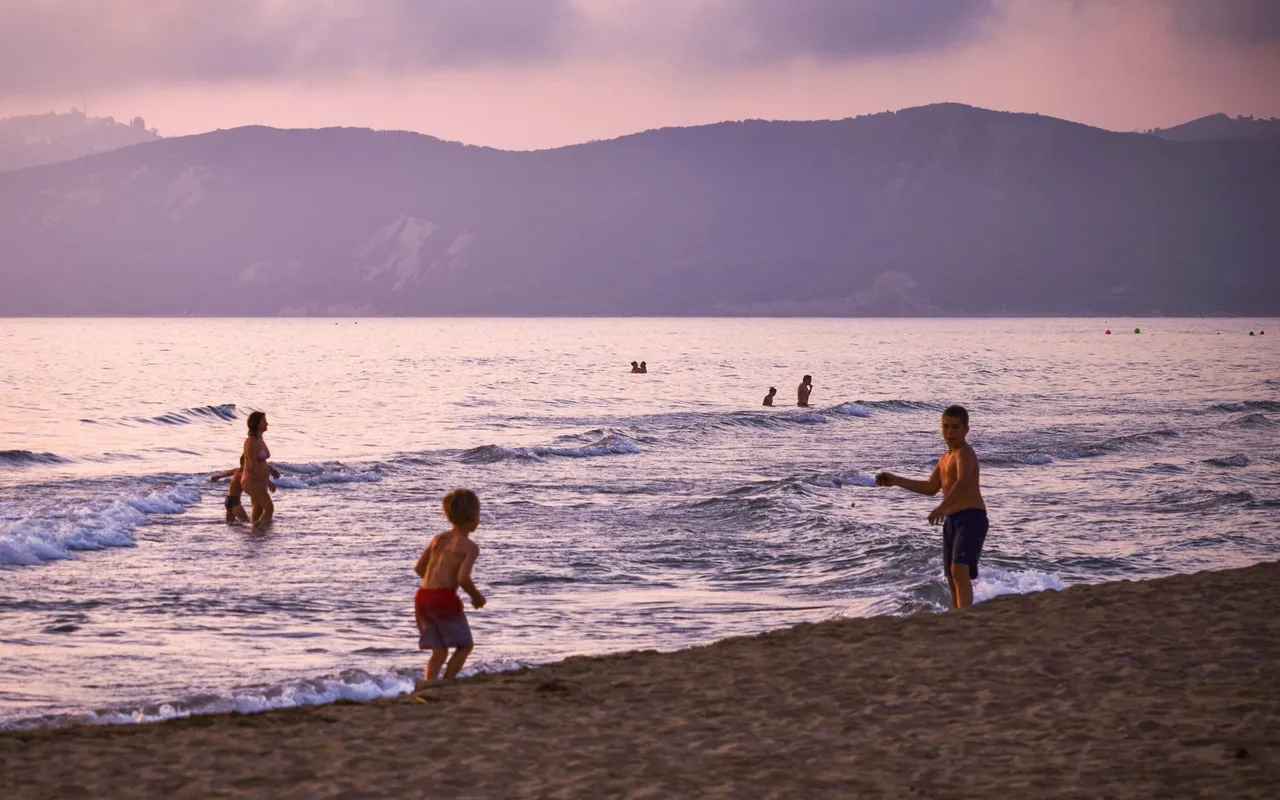
The Mediterranean beaches themselves deserve more nuance than they typically receive. The coast between Cannes and Antibes, and again around Juan-les-Pins, includes stretches of sandy beach that are significantly more family-friendly than the rocky coves further east near Monaco. Families who have only visited Nice's famous Promenade des Anglais and found the pebble beach difficult for small children sometimes conclude that the whole Riviera is like that. It is not.
The sheltered bay at Villefranche-sur-Mer has calm, clear water and a sandy bottom at low depth, making it popular with families who snorkel. The Îles de Lérins, reachable by short ferry from Cannes, offer pine-shaded picnic areas, walking paths, and swimming spots away from the noise of the main coast. For families renting a villa or an apartment through platforms like Airbnb, proximity to these less commercial spots often matters more than a central urban location, and many rental properties in the hills between Mougins and Grasse include private pools as a standard feature.
The question of seasonality, which most guides get wrong
Conventional wisdom says visit the Riviera in July and August for the full experience. For families, that advice is questionable at best. July and August bring the highest temperatures, the densest crowds on public beaches, and peak pricing across accommodation. The roads between Cannes and Nice can become genuinely unpleasant with traffic.
September, by contrast, offers sea temperatures that remain warm from a summer of accumulation, significantly thinner crowds on both beaches and in villages, and a cultural calendar that often includes harvest festivals in the inland villages, outdoor cinema screenings, and local markets at their most generous. The early autumn window is arguably when family activities and leisure on the French Riviera reach their most comfortable balance: the infrastructure of summer is still running, but the pressure has lifted.
Spring, from April onward, works well for families focused on outdoor activities rather than swimming, since the wildflower season in the hills is spectacular and hiking conditions are ideal before the heat arrives.
Accommodation choices shape the experience more than most families expect
Where a family stays on the Riviera is not merely a logistical question. It shapes the entire texture of the holiday. A hotel room in central Nice, however comfortable, constrains a family's rhythm in ways that a rented house with a garden does not. The ability to cook a simple meal, to let children move freely in a private outdoor space, and to store beach equipment without negotiating a hotel lobby changes the daily experience considerably.
The short-term rental market on the Côte d'Azur is extensive, ranging from modest apartments in Antibes to large villas with pools above Grasse. Professional property managers who specialize in the area, often working alongside platforms like Airbnb, can offer families guidance on neighborhoods, proximity to specific beaches or villages, and the practical details that make a difference with children. A property near a village market, a bakery, and a safe road for cycling covers most of what a family actually needs on a daily basis.
The Riviera rewards those who resist the urge to see everything in favor of settling into a smaller radius and exploring it properly. For families, that is not a compromise. It is the approach that tends to produce the holidays that get talked about years later.
About the author
Alexia Cordoba
Regional development stories often overlook the intersection of heritage preservation and contemporary economic shifts—a gap Alexia Cordoba addresses through her reporting on the Côte d'Azur's evolving landscape. Her work examines how local communities navigate transformation while maintaining cultural identity, drawing on direct observation and stakeholder interviews rather than predetermined narratives. Based in the region, she contributes analysis on infrastructure, tourism policy, and territorial planning to Riviera Luxe Concierge.