Where superyacht owners actually choose to berth along the Mediterranean coast
Over 30,000 superyachts operate in European waters, and the overwhelming majority spend their most active months somewhere along the Mediterranean coastline. That figure alone tells you something essential about what this sea represents for the global yachting industry: it is not simply a body of water but a curated circuit of port infrastructure, prestige, and social visibility. Yacht owners do not choose a marina the way a road tripper picks a motel. They choose it for its depth, its services, its proximity to restaurants and private aviation, and the quiet status it confers on anyone watching from the quay. The best luxury marinas and yacht ports the Mediterranean has to offer have spent decades engineering exactly that combination, and the competition between them has only sharpened the quality of what each one delivers.
Monaco remains the most cited reference point for superyacht culture in Europe. Port Hercules, the principality's single working marina, is one of the most photographed port settings in the world, and for good reason. Its location is almost theatrical: towers stacked on cliffs, the casino district within walking distance, and berths that accommodate vessels well over 100 metres. The facilities are designed for serious operational demands, including shore power rated for the largest hulls, dedicated superyacht services teams, and fuel infrastructure that handles volumes most marinas never see. Port Hercules also hosts the Monaco Yacht Show each autumn, an event that transforms the marina into a floating exhibition of the world's most expensive new builds. Yacht owners who berth here year-round gain a kind of institutional credibility that no other Mediterranean port quite replicates, and access to Monaco's financial and social networks is, for many, the real product being purchased.
Understand what separates a prestige port from a well-equipped marina
Not every marina with a waiting list qualifies as a luxury destination. The distinction matters more than it might seem, and it shapes how yacht owners plan their entire season. A marina can offer deep berths and reliable electricity without offering the experience that makes a port genuinely desirable. What separates the top tier is a convergence of physical infrastructure, curated services, and a surrounding environment that rewards time spent ashore. Port Vauban in Antibes illustrates this principle clearly. It is the largest marina in Europe by berth count, and its superyacht zone handles some of the longest vessels afloat. The port's facilities include technical refit services that attract owners who want serious maintenance work done between charters, not just cosmetic attention. Antibes itself offers a dense concentration of yacht brokers, crew agencies, and provisioning specialists, which means the port functions as a professional hub as much as a leisure destination. The restaurants lining the old town are a short walk from the quay, and the combination of working infrastructure with genuine Provençal character gives Port Vauban a texture that purely glamorous ports sometimes lack.
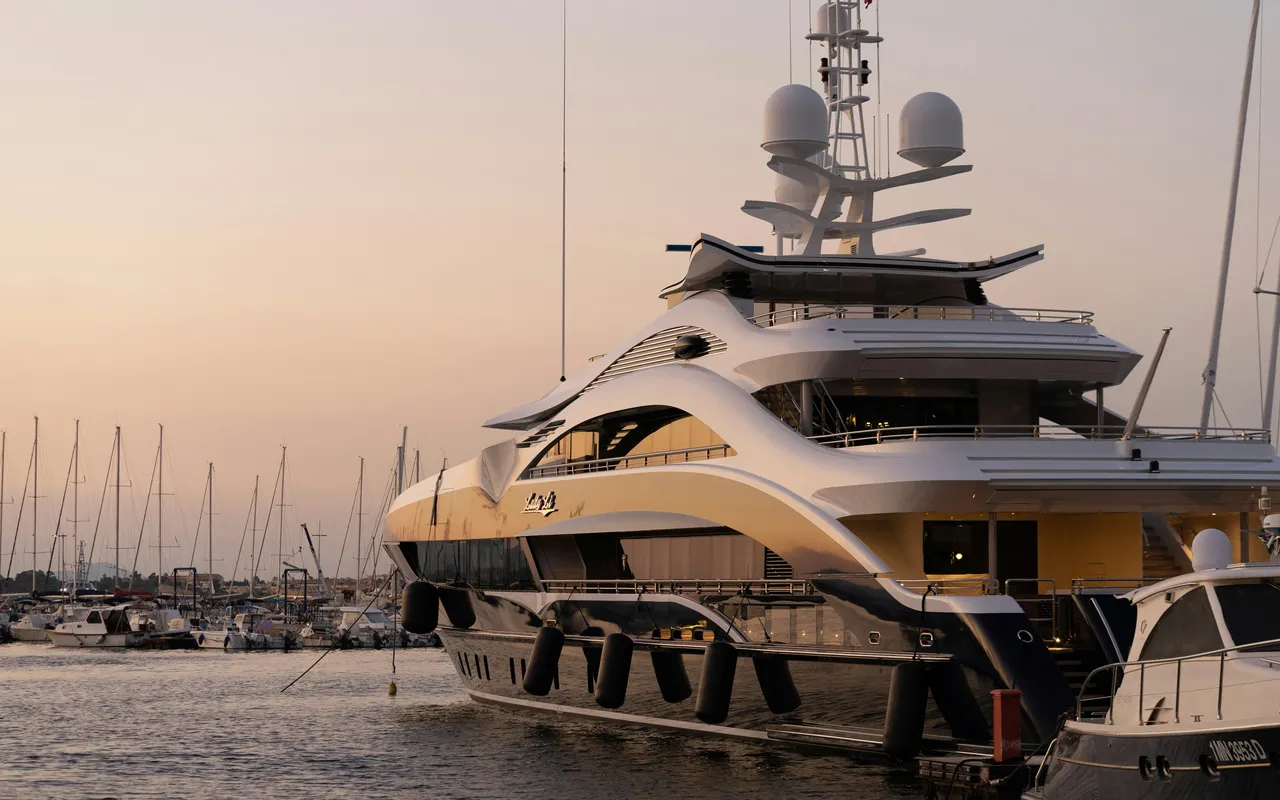
Further west, Port Adriano on the Balearic Islands represents a different philosophy entirely. Designed by Philippe Starck and opened with an explicit ambition to be the most architecturally distinctive marina in the Mediterranean, it offers berths for superyachts alongside a retail and dining environment that feels more like a curated resort than a working port. Marina Ibiza, on the neighbouring island, draws a younger, more socially driven crowd and offers services calibrated to that demographic, with access to the island's nightlife infrastructure built directly into the marina's identity. Both ports demonstrate that the Balearic Islands have become a serious contender in the luxury marinas and yacht ports Mediterranean circuit, not simply a summer overflow from the French Riviera. The archipelago now attracts owners who plan their season around it rather than through it.
The Italian coast contributes its own defining entries to this world. Porto Cervo on the Costa Smeralda in Sardinia has been the reference point for Italian superyacht culture since the Aga Khan developed the area in the 1960s. The marina regularly hosts vessels from the very top of the size range, and its location within a private resort community means that the facilities extend well beyond the water's edge into golf courses, beach clubs, and some of the most sought-after restaurants in the Mediterranean. The port is managed with a level of discretion that yacht owners with high public profiles find particularly valuable. Porto Cervo does not advertise itself aggressively; its reputation circulates through the community of owners and captains who return season after season, treating it as a fixed point on the calendar rather than an occasional destination. That loyalty is itself a form of endorsement that no marketing campaign can manufacture.
Greece has also repositioned itself as a serious player in this space. Marinas such as Flisvos in Athens and the newer infrastructure developing around the Ionian and Aegean islands offer a combination of deep-water berthing capacity and proximity to some of the most dramatic cruising grounds in the world. The Greek government has invested substantially in upgrading port facilities to meet the expectations of superyacht operators, and the results are beginning to show in the routing decisions of captains who previously bypassed the country in favour of Italy or Croatia. The Croatian coast, for its part, has built a strong reputation around marinas like ACI Marina Dubrovnik and the facilities around Split, where medieval architecture and modern yachting infrastructure exist in an unlikely but effective combination.
Measure a marina by what it offers when the season ends
One of the most revealing tests of a marina's true quality is what it offers outside the peak summer months. The best Mediterranean ports maintain their services and facilities year-round, which matters enormously to yacht owners who keep their vessels in the water through autumn and winter. Port Vell in Barcelona exemplifies this approach. Located in the heart of the city, the marina offers superyacht berths within direct access of one of Europe's most functional urban environments, with high-capacity shore power, robust security infrastructure, and a surrounding neighbourhood dense with restaurants, hotels, and cultural institutions. Barcelona's year-round climate and its airport connectivity make Port Vell a genuinely practical choice for owners who want their vessel close to major travel infrastructure without sacrificing the quality of the berthing experience. The marina also benefits from proximity to a thriving nautical services industry that can handle everything from electronics upgrades to full hull work.
The French Riviera as a whole continues to define what most of the world imagines when it pictures luxury marinas and yacht ports in the Mediterranean. From Cannes to Nice, the concentration of superyacht-capable ports within a short coastal stretch is unmatched anywhere in the world. Each marina along this stretch has developed its own character: Cannes offers the glamour of the film festival quay and berths that see some of the most impressive superyacht arrivals of the year; Antibes offers the professional depth of the largest marina in Europe; and the smaller ports between them provide access to coves and villages that larger vessels simply cannot reach. The intelligence of the Riviera as a yachting destination lies in this layering, where owners can move between ports over the course of a week and have an entirely different experience at each one while never straying far from world-class services.
For yacht owners planning their Mediterranean season, the question is rarely which single port is objectively the best. It is which combination of ports serves the rhythm of the trip, the size of the vessel, and the preferences of the people aboard. The marina itself has become part of the itinerary, not just a logistical necessity. The port you choose signals something about the kind of experience you are building, and the most sophisticated owners treat that choice with the same care they give to the vessel itself. The Mediterranean, for all its history and beauty, has never been more precisely engineered for the demands of superyacht travel.
About the author
Katia Medjari
Understanding regional markets requires spending time in the field, observing how local dynamics shape consumer behavior and business strategies. Katia Medjari brings this ground-level perspective to her coverage of regional developments, focusing on the economic and cultural shifts that define territories beyond major urban centers. Her reporting examines how local actors navigate regional opportunities and challenges, with particular attention to the factors that distinguish one market from another.